Sports is the genesis of BDA (PPAI 109381, Platinum), PPAI 100’s No. 7 distributor.
In 1984, childhood friends and BDA founders Eric Bensusen and Jay Deutsch sold customized pins at a massive annual summer festival in Seattle. Recognizing an untapped demand for localized sports and event apparel, they created custom sweatshirts emblazoned with “Alaska’s Team Seahawks” and cold-called the NFL to secure a license.
Over 40 years later, BDA has established itself as a juggernaut in sports merchandising, partnering with the NFL, NBA, MLB, NHL, NCAA, MLS, FIFA, the Olympics, UFC, PGA Tour, WNBA, NASCAR and more.
PPAI Media recently spoke with Steve Avanessian, executive vice president of sports at BDA and a nearly 30-year company veteran, about how the firm has transformed branded merch from traditional promotional giveaways into a powerful marketing tool that drives fan engagement, strengthens partnerships and generates revenue for professional sports organizations.
The following interview has been edited for clarity and brevity.
PPAI Media: How has BDA been able to grow its presence in the sports marketing sector?
Steve Avanessian: BDA has tried to provide a different outlook for what the promotional industry should be. For a lot of our competitors, it’s still a very supply/vendor-based relationship.
I had a true consumer marketing background, so it was important to look at BDA as a true agency experience. How can we look at our category of merchandise as a true medium for effective direct marketing and advertising? Instead of customers saying, ‘I just want 100,000 T-shirts,’ now we sit back and ask, ‘What are you really trying to accomplish?’

Steve Avanessian
EVP of Sports, BDA
Instead of sending our account teams out with buckets of catalogs, we sent them out with a pen and paper to interview clients and prospects to find out what are the needs, KPIs and initiatives that they need to spend against to get a true return on their investment. That was revolutionary at the time, but we felt it was important to uplift the entire industry and set us apart.
We took that model and went to all the other leagues to create something new together. It was a service model rather than a product model that really helped expand what we were trying to do in sports.
PPAI Media: Has that model evolved over time?
Avanessian: Yes. What was critical in our approach was looking at three areas of sports management:
- What are the leagues trying to do from an activation standpoint
- What are the partners and sponsors trying to do
- What are the teams trying to do
Don’t Miss A Thing: SUBSCRIBE To PPAI Newslink
Initially, you think all three have the same initiatives and KPIs, but they don’t. They have different ways of tracking fans and gaining their affinity. Identifying those three different buckets and trifurcating the approach to what needed to be done to enhance the experience is why our model is unique.
PPAI Media: Considering all of the different parties involved, how are you able to maintain these relationships?
Avanessian: Part of our success is due to having a great team. As we’ve grown in revenue, we’ve grown our people. Employees who started 25 years ago as coordinators and interns are now senior account managers. The validation of our success is that we’ve actually attracted a disproportionately high number of our customers to our team.
To create this sustainable, repeatable model, another key part was finding commonalities. Although you have all of these differences, people still have these similar goals.
Teams want to attract long-term fans. Sponsors want to put more of their products into the hands of those fans. Leagues want to put more of that product of the sponsors and the teams into the hands of fans as well as own the greatest market share you can of fandom. Understanding what those buckets are, how you put them together and how you cross pollinate is critical.

PPAI Media: What can you tell me about BDA’s Think Tanks? They look like somewhere we need to be.
Avanessian: We host symposiums in Las Vegas or Seattle in which we bring all of the teams together for three days of product shows, promotions, trend analysis and analytic profile creation. It has really helped us.
MLB itself is a participant now. We’ve upleveled not just the curriculum, but also the conversation. Now the premium guidelines for MLB are launched at Think Tank. We’ve created an area that didn’t have the same level of oversight and prominence as everything else.
While there was a consumer product or partner summit, there was never a summit for the league for the people who were doing the promotional purchasing and fan driving, which is crazy to think about considering fans are the lifeblood of the experience.
Things have happened as a byproduct that we never experienced. We allow two people from each team to come to Think Tank. Over the past 15 years, some teams have offered to pay to send a third person because the symposium is the only opportunity where they get a lot of training in the category.
PPAI Media: So, the ideas for brand activations and collaborations often come from Think Tank?
Avanessian: When we relaunched the bobbleheads in 1999 with Cal Ripken Jr. for the Baltimore Orioles, we brought it to Think Tank. It led to dynamic conversations because this whole notion of custom polyresin is something that was traditionally considered a retail product.
Every year, Sports Business Journal will call me and ask, ‘What’s this year’s bobblehead?’ It’s a bobblehead! There are certain things that will never be replicated. When you hit something that’s endemic for a particular league or what an experience is like, the bobblehead became that item. It transcended product and became this unique must-have.
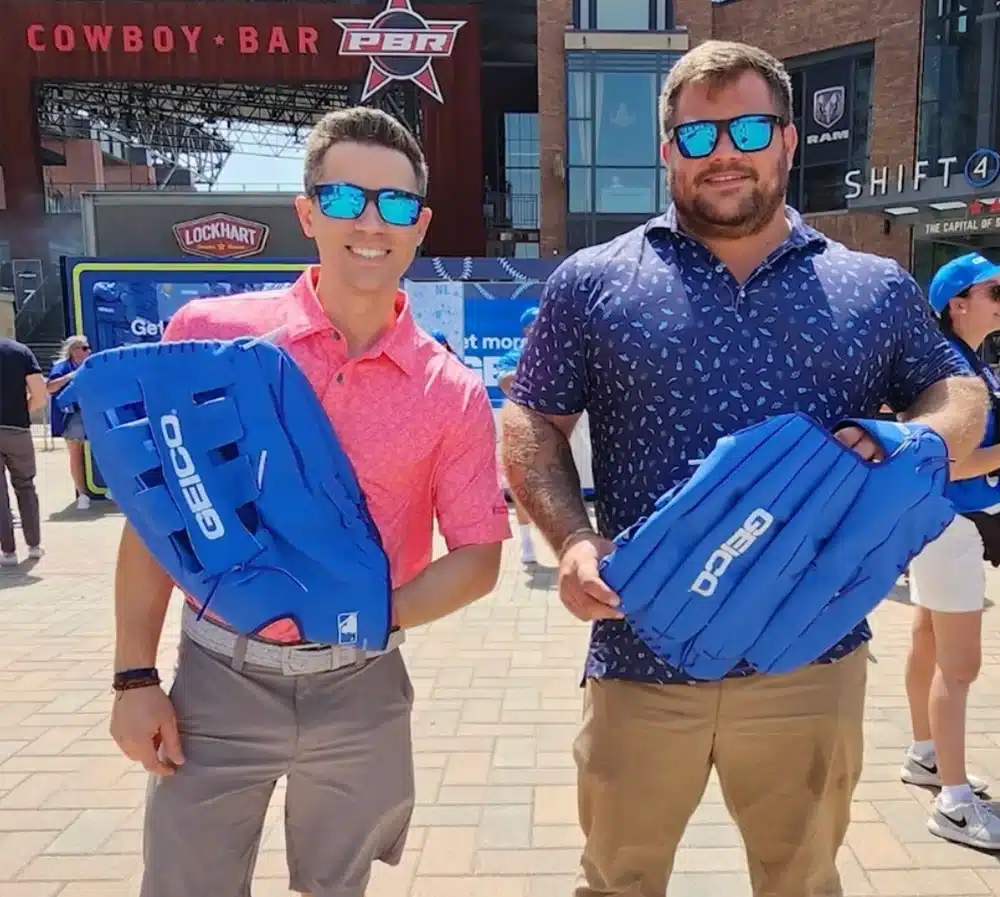
At the end of a baseball season, if a team is going to be out of the playoffs, people aren’t walking up to buy tickets. Walk-up sales are a really important metric. A lot of times dynamic pricing will say the day before the game that tickets are now $5. But we’ve worked with the teams on adding a bobblehead to that particular night, so the value of the ticket is back up to $25.
We work on those analytics and dynamic pricing models to show merchandise can help drive revenue and per cap values versus here’s just a thank you for showing up to the game.
PPAI Media: What is your role in all of this? Are you involved on the ground floor of helping create giveaways?
Avanessian: Once every four months, a league will call and say they’re interested in doing a program. It’s my job to evaluate whether it makes sense for our services. We can’t handle everything. From a creative standpoint, training, documentation and setting up the systems to provide royalty payments, that all require a certain amount of time. Sometimes, we’re just not the right partner for a league.
But I’m still involved in creative strategic discussions. I jump on as many calls as I can because it keeps me close to the end user. If I’m not part of those discussions, it’s very difficult for me, with any authority or clarity, to speak to the teams or the leagues about what we’re seeing.
I’m also involved in strategic purchasing decisions when we’re doing large bulk buys like the post-season for MLB. We do every single rally towel. Over the course of 35 days, we’ll distribute 3.1 million rally towels and not a single one is white. They have to be a team color.

There are things that I bring to my team, where they tell me it isn’t fun and that I’m old. Part of the creative process is having that discussion. Whether you’re an intern or in the executive seat, everybody gets a vote. If you don’t allow that, you kill creativity. If you ask my team, I’m probably too involved in it.
PPAI Media: How has the proliferation of gambling in sports impacted branded merchandise?
Avanessian: These companies are official partners of the leagues. The fact that they’re official sponsors means they get the same rights and privileges as any official sponsor. When sports gambling became okay, every team in the league brought on an official partner for online gaming. It was a great category that brought in a lot of revenue.
When we work with one of the online gaming partners, it’s the same focus as when we work with any other partner: customer acquisition. How do we create campaigns that are exciting for people to sign up – not to spend money – but to sign up and be part of the platform. How are we doing certain gifting programs? Just like with any other casino, you have VIPs and other levels, so we work with them on different tiers of gifting.
Those organizations are very thoughtful in what they’re doing. The products obviously have to be focused on adults. We make sure we’re conscious of who the end recipient is. When a new category opens up, it’s an absolute thrill. When online gaming came on, we were literally watching each state ratify the legal aspect and then immediately getting calls from teams.