
The days of promotional products being viewed as “free stuff” are long gone. By 2026, they have evolved into lifestyle companions – items that consumers choose to use, keep and often showcase.
Promo products are more than effective marketing tools; they’re extensions of a brand’s identity and a reflection of the consumer’s own tastes. As anyone in the industry can attest, products that blend function, style and sustainability have become the new standard.
PPAI’s consumer study, Product Power 2026, conducted among more than 5,000 U.S. respondents, reveals a fundamental shift: People now associate branded merchandise with personal relevance, design appeal and emotional connection. That’s why the most successful brands are those that create merchandise people are proud to be seen with.
“Consumers don’t want more products, they want better ones,” says Alok Bhat, market economist, research and public affairs lead at PPAI. “They’re rewarding brands that offer thoughtful, functional and emotionally resonant products rather than mass giveaways.”
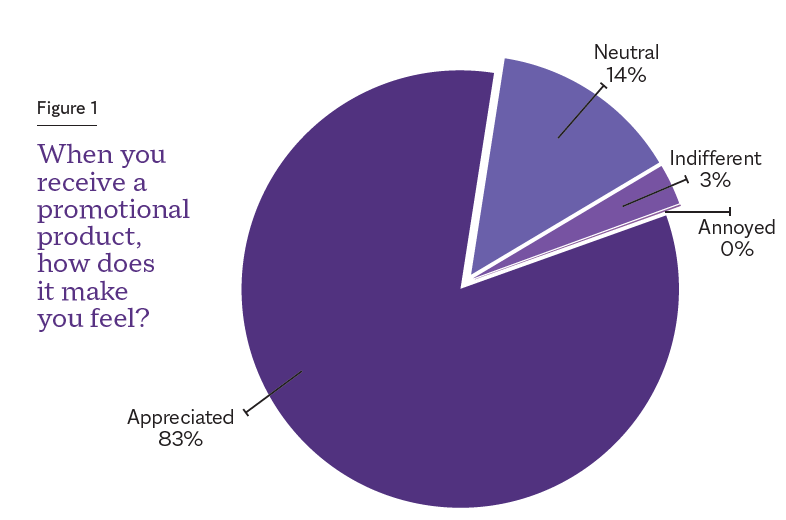
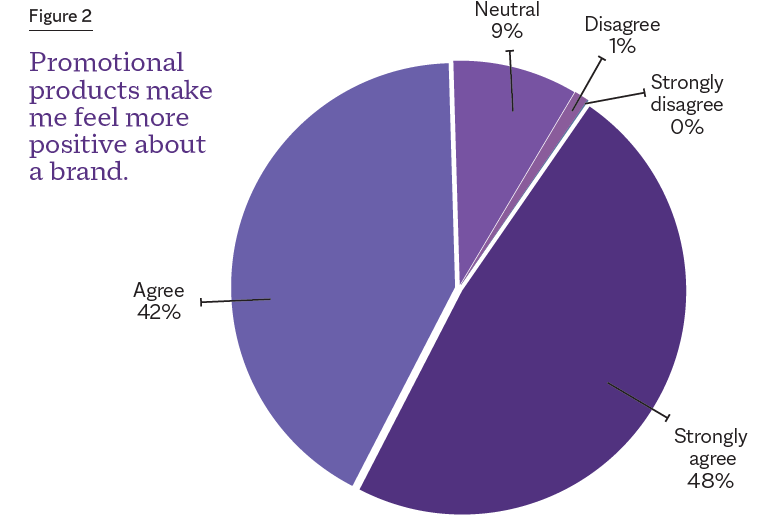
The findings are clear: Branded items are now viewed as experiences rather than extras. Roughly 83% of consumers say receiving a promotional product makes them feel appreciated (see Figure 1), while 90% agree it improves their perception of the brand (see Figure 2).
Nearly three-quarters (72%) associate branded merch with positive emotions such as pride, belonging or gratitude. This emotional uplift translates into recall and retention – the two strongest predictors of long-term brand engagement.
“Emotional connection has become the new metric of success,” Bhat says. “In an age of digital noise, physical products now stand out precisely because they create something personal, a feeling.”
Industry Staples
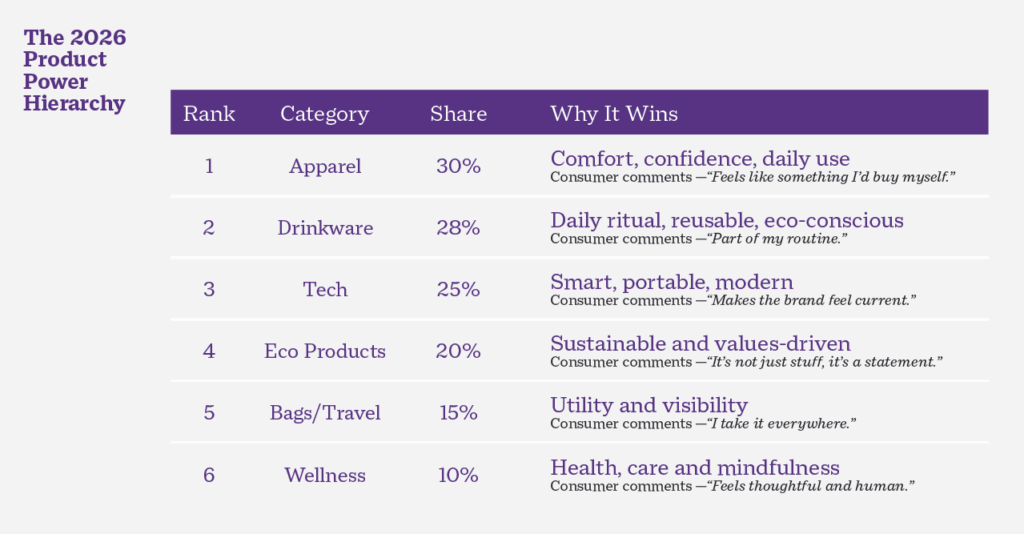
Branded apparel is evolving beyond logo placement – it’s becoming a wearable expression of belonging.
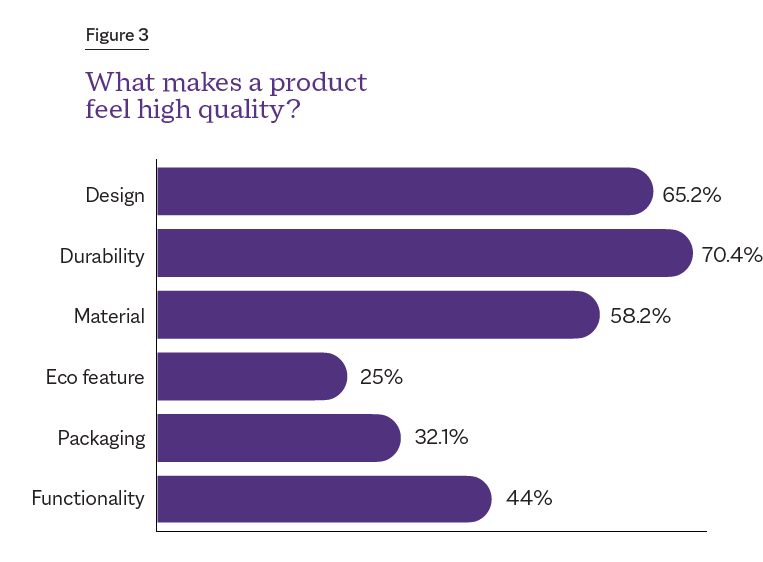
Nearly two-thirds (65%) of consumers say they’re very likely to keep a branded product for six months or longer, citing durability, design and material as key reasons (see Figure 3).
“When consumers feel good wearing a branded shirt or hoodie, it’s more than marketing,” Bhat says. “It’s identity affirmation, because the product becomes part of their personal story.”
Meanwhile, reusable drinkware continues its reign as one of the most loved categories. Nearly three-quarters (73%) of consumers use branded bottles or tumblers daily, and 70% say a durable, well-designed piece makes them feel good about the brand.
“Drinkware has quietly become the industry’s most visible branding space,” Bhat says. “It’s in consumers’ hands every day, literally traveling with the brand.”
Tech accessories are emerging as a symbol of innovation and forward thinking. Nearly 38% of consumers say tech items make them view the brand as modern and relevant. “Smart gear shows a smart brand,” one respondent wrote.
“Technology carries status,” Bhat adds. “It represents adaptability and innovation – traits people want to associate with.”
As promo’s sustainability journey continues, it’s important for suppliers and distributors to continue to meet consumer demand. After all, nearly half (49%) say a brand’s eco commitment directly affects how trustworthy they find it, and more than two-thirds (68%) identify recycled or reusable materials as their top sustainability preference (see Figure 5).

“Eco messaging isn’t enough anymore,” Bhat says. “Consumers expect transparency. They want to know what’s recycled, where it’s made and how it helps.”
The Big Takeaway
Across thousands of responses, one truth stood out: Consumers are raising their expectations, not their attention spans. They want fewer products, but those they receive should be better designed and more meaningful.
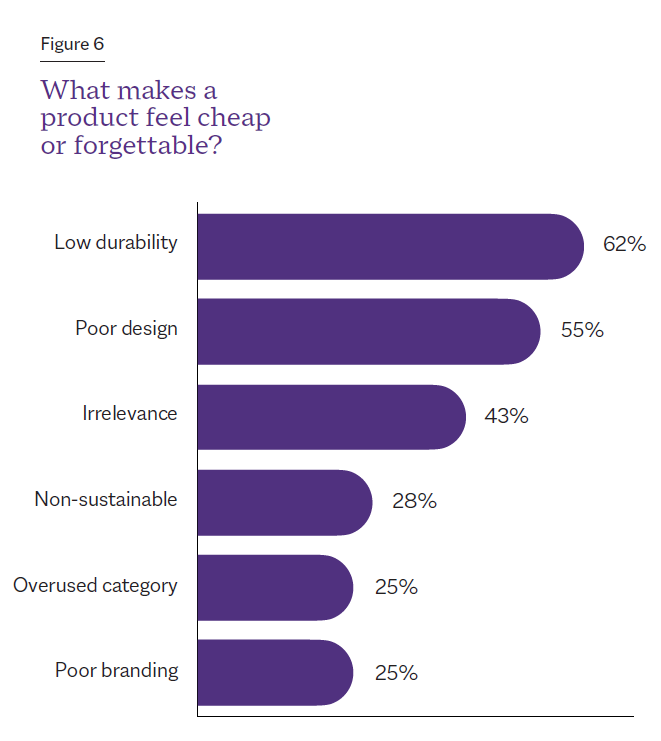
That’s why it’s no surprise that low durability, poor design and irrelevance are the three leading causes for merch to feel cheap or forgettable, consumers say (see Figure 6).
Consumers are looking for promo products that feel intentional, not incidental. They want items that tell a story, align with their values and serve a real purpose in their daily lives. When companies deliver on those expectations, merch transforms from a giveaway into a genuine connection.
“Purpose and perception now drive promotional success,” Bhat says. “When usefulness, design, sustainability and emotion come together, the product doesn’t just represent the brand, it becomes the brand.”
Corrigan is deputy editor at PPAI.

